Vaccine Benefits

Vaccines Save Lives
Over the years, vaccines have prevented countless cases of disease and disability and have saved millions of lives.
For example, polio was one of the most dreaded childhood diseases of the 20th century, and it paralyzed approximately 21,000 people at its peak each year in the U.S.
Through successful vaccination programs around the world, polio is almost gone.
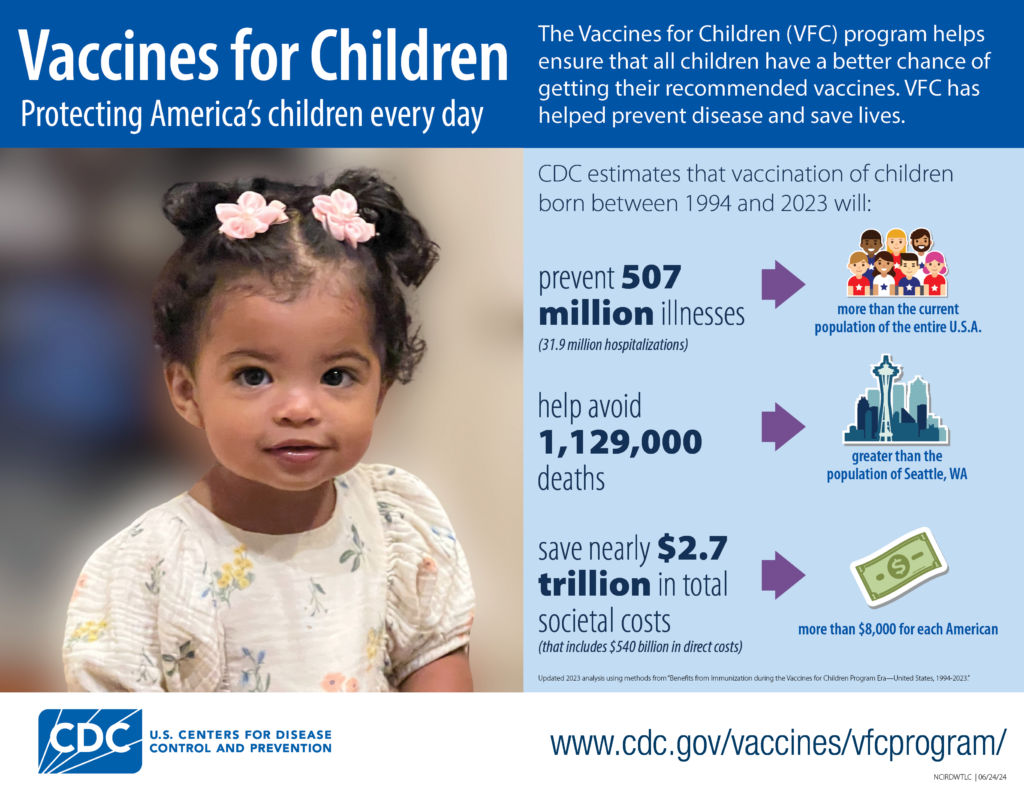
The CDC estimates that vaccination of children born between 1994 and 2023 in the U.S. will prevent 508 million illnesses, 32 million hospitalizations, 1,129,000 deaths, and save nearly $2.7 trillion in total societal costs (including $540 billion in direct costs).

Vaccination prevents 508 million illnesses and helps avoid more than 1.1 million deaths among children born between 1994 and 2023 in the U.S.
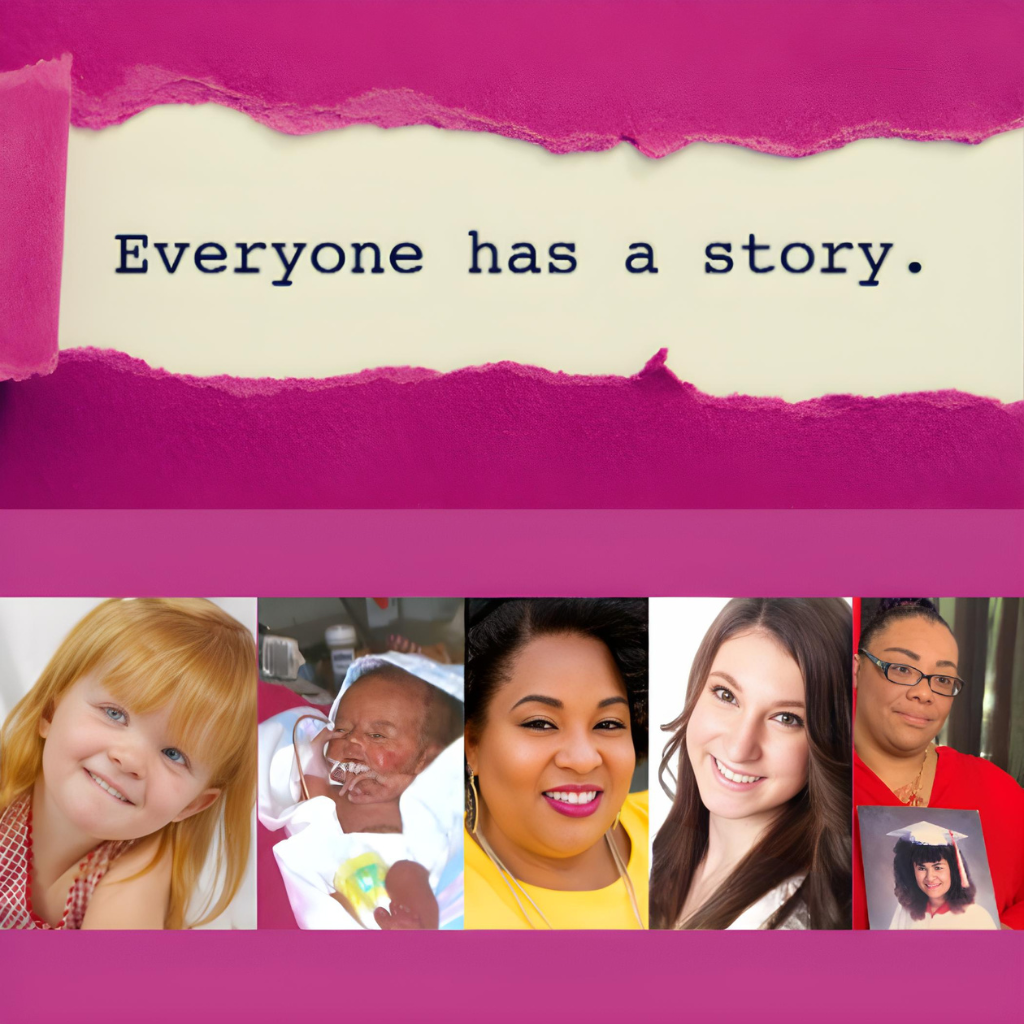
Unfortunately, too often, our organization learns of people who suffer from illness and disability from infectious, yet preventable diseases, or of families who mourn the devastating loss of loved ones from an illness that could have been prevented through vaccines.
Community Immunity: How Vaccines Protect Everyone
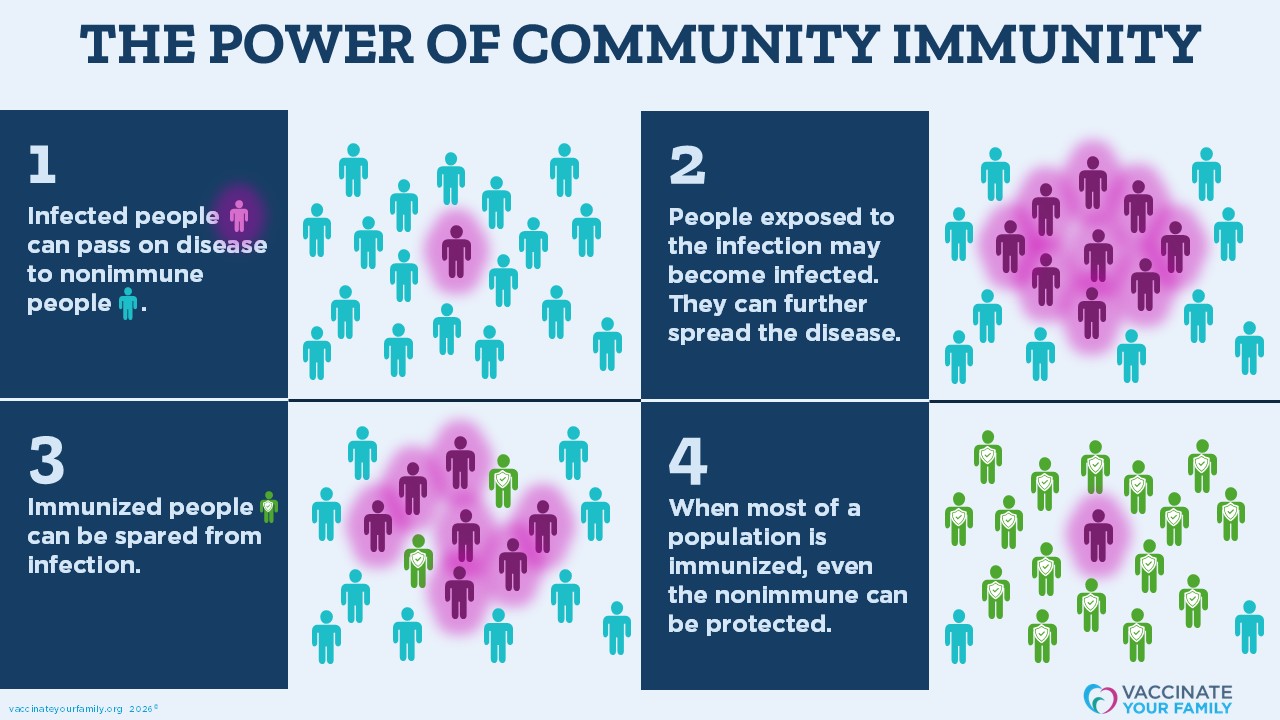
When enough people in a community are vaccinated against a disease, it becomes difficult for that disease to spread, even to people who can’t be vaccinated. This is called community immunity, also known as herd immunity.
Some people cannot be vaccinated for medical reasons, such as allergies to vaccine components or weakened immune systems. Others, like newborns, are too young to receive certain vaccines. These people depend on those around them being vaccinated to stay protected.
Community immunity isn’t a fixed number—the proportion of people who need to be vaccinated to achieve it varies by disease. The more contagious a disease, the higher the threshold. Measles, for example, is so contagious that roughly 95% of a community needs to be immune to prevent it from spreading.
When vaccination rates fall below that threshold, even in a small pocket of a community, outbreaks can and do occur. Staying up to date on vaccines isn’t just a personal decision. It’s one of the most important things you can do for the people around you.
Vaccines are Cost-Saving
Vaccine-preventable diseases can be very costly resulting in doctor’s visits, hospitalizations, and premature deaths. Additionally, national, state and local outbreak responses require significant time, money, and resources. Through timely vaccinations, the U.S. saves trillions of dollars—routine childhood vaccinations alone save $2.7 trillion in societal costs.